





NEWS
On the Couch: A Conversation with Roger Sharp and Dr Nic Woods from Bupa
There is a growing recognition across healthcare that human health and environmental health are deeply interconnected. From the air we breathe to the design of our cities and the natural spaces we rely on, the environment plays a direct role in shaping health outcomes. For Bupa, this understanding is influencing not only how care is delivered, but how health is supported and protected in the first place.
In this conversation, Roger Sharp, Chief Sustainability & Corporate Affairs Officer – Asia Pacific and Dr Nic Woods, Chief Health Officer discuss how this shift is shaping Bupa’s approach, from prevention and nature regeneration through to everyday operations and long-term healthcare outcomes.
A conversation with Roger Sharp and Dr Nic Woods: Reimagining healthcare through the connection between people and planet.
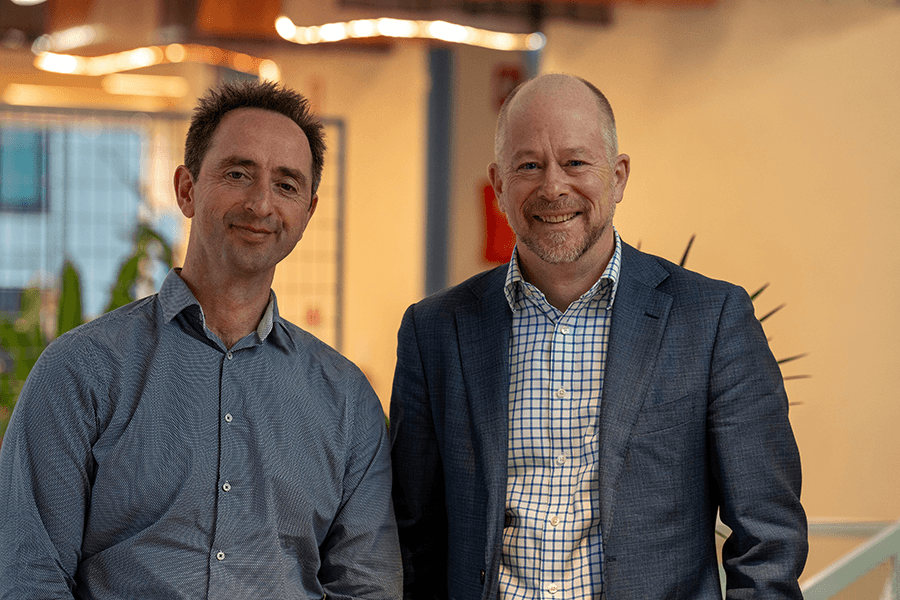
Dr Nic Woods, Chief Health Officer and Roger Sharp, Chief Sustainability & Corporate Affairs Officer – Asia Pacific
There’s growing recognition that human health and environmental health are closely linked. Why is this shaping how Bupa approaches care?
Roger Sharp:
There’s a growing body of evidence that makes it impossible to ignore the connection. The health of our environment, the air we breathe, the places we live, and where our children play has a direct impact on health outcomes. For a healthcare organisation like Bupa, that means we need to look beyond treatment and think about how we help prevent ill health and create the broader environmental conditions for healthier lives over the long term.
Nic Woods:
From a clinical perspective, that connection is very real. We’re seeing more patients significantly affected by heat, pollution often alongside the stress and anxiety related to environmental change. These issues influence everything from heat stroke, respiratory disease to mental health. There is also an unfortunate increase in mortality with many of these events. Addressing them isn’t a departure from healthcare, it’s part of delivering good healthcare.
Roger, how does this thinking influence the kinds of initiatives Bupa invests in?
Roger:
It pushes us towards preventative health and nature regeneration, not just carbon reduction. Programs like Healthy Cities are a good example.
Healthy Cities seeks to address the upstream drivers of poor health, by reducing future health system demand while building greener, cooler and more livable cities that are more resilient to climate impacts.
At its core, Healthy Cities is a simple but powerful mechanism, invest in your health and Bupa reciprocates with funding for environmental regeneration projects. It encourages people to move more, and build healthier habits, while directly influencing greener, more liveable urban environments. Those outcomes reinforce each other. Since 2023, our Healthy Cities program has resulted in planting over 550,000 native plants and trees in our Asia Pacific region of which over 57,000 have been planted across Queensland.
It also extends to larger, long‑term commitments. For example, Bupa’s the Nature Regeneration Project at Mount Eccles in Victoria’s South Gippsland region is about restoring a large-scale farm back to its original state, improving biodiversity and capturing carbon. This kind of work will contribute to healthier ecosystems that people ultimately depend on.
Nic:
For Bupa, this is about redefining healthcare for a changing world, understanding that protecting human health and protecting environmental health are not separate goals, but intrinsically linked responsibilities.
When healthcare organisations invest in restoring nature, the benefits flow well beyond the boundaries of traditional clinical care. The connection between time in nature and positive benefits on reducing stress and anxiety are reasonably well understood and are a great tactic to integrate into a healthier lifestyle.
Can you tell us more about the Mount Eccles project and why it matters?
Roger:
The Nature Regeneration Project at Mount Eccles is a long‑term nature regeneration initiative restoring a former farm through the planting of more than 200,000 native trees and shrubs, bringing back wildlife and helping improve soil and water quality. Over time, it’s expected to capture 200,000 tonnes, the equivalent of the greenhouse gas emissions created by simultaneously recharging sixteen billion smartphones.
What’s important is that it’s not about offsetting responsibility, but about taking tangible steps that reflect how healthcare must evolve, by coupling delivering care with reducing impact and actively contributing to healthier environments. The project has also been approved Australian Government’s Clean Energy Regulator.
Nic:
Research consistently shows that healthier environments reduce illness, hospitalisation and long‑term health risks. You might not draw a straight line between a regenerated landscape and a health outcome, but the connection is there and it’s powerful, particularly at a local level.
Sustainability also shows up in how Bupa operates day‑to‑day, including energy use. Why was the move to renewable electricity significant?
Roger:
Because it was practical and immediate. Moving our operations across Australia, New Zealand and Hong Kong to 100% renewable electricity reduced direct emissions across our clinics, aged care homes, retail stores and offices. It was a clear signal that sustainability needs to be embedded into everyday operations, not treated as a separate agenda.
Nic:
From a health perspective, reducing emissions is a form of prevention. Climate change is a growing health risk, so taking steps to reduce its drivers is aligned with protecting community health now and into the future.
We also can’t shy away from the fact that that the healthcare sector is a significant contributor to both waste and emissions, responsible for around 5.4 per cent of the nation’s total emissions each year.
By undertaking regeneration projects along other carbon emission reduction programs such as partnerships with Health Care Without Harm, we are making real strides forward towards cleaning the environment, creating a healthier Australia and reducing the burden on the healthcare system.
How does this broader approach support better healthcare outcomes?
Nic:
Healthcare systems everywhere are under pressure. So, any activities that reduce the incidence of illnesses are important. Sustainable facilities and healthier environments also support staff wellbeing, which directly affects quality of care. Also shining a light on the demand on already stretched health services during environmental events such as bush fires hopefully helps the calls to action.
Roger:
And that’s where these initiatives come together. When sustainability, prevention and care are considered as part of the same system, you get better outcomes across the board… for people, communities and the health system itself.
How are Bupa’s people responding to this way of working?
Roger:
There’s strong engagement because people can see the impact. Whether it’s participating our Healthy Cities program, knowing their workplace is powered by renewable energy, or seeing long‑term projects like the Nature Regeneration Project at Mount Eccles take shape, it helps turn purpose into something tangible.
Nic:
For clinicians, it’s reassuring to work within an organisation that acknowledges the broader drivers of health. It aligns professional care with a wider sense of responsibility to patients and communities, which are ultimately inextricably linked.
Looking ahead, what does success look like for Bupa in this space?
Roger:
Success is when these considerations are simply part of how business decisions are made. When prevention, sustainability and health outcomes are naturally connected. Healthier cities, restored landscapes and lower‑impact healthcare all contribute to the same goal.
Nic:
At a clinical level, it’s all about when people reap the benefits of healthier environments, and communities that are much better equipped to support people’s physical and mental health in a preventative way.
As the links between environmental health and human wellbeing become clearer, Bupa’s approach reflects a broader shift in how healthcare is understood and delivered. From investing in nature regeneration projects like Mount Eccles, to transitioning to renewable energy and supporting preventative health initiatives, the focus is moving beyond treatment towards the conditions that shape health in the first place.
For Roger Sharp and Dr Nic Woods, the message is consistent: healthier people depend on healthier environments. When sustainability, prevention and care are treated as part of the same system, the result is not only better health outcomes for individuals, but stronger, more resilient communities and health systems into the future.
If you would like to be a part of our On the Couch series, please reach out to Phoebe Mann at [email protected].